3UP
4 November 25
They would go on to demonstrate that the teams at the top of the National League - then still known as the Football Conference - weren’t plucky outsiders punching above their weight. They were Football League clubs in waiting.
As we build towards the 3UP Day of Action on Saturday 15 November, the Doncaster story feels newly relevant. Because over two decades on, the evidence is overwhelming: the quality gap between the two divisions disappeared long ago. And Donny were among the first to show it.

Relegated from the Football League in 1998 after 68 years, the club repaired and rebuilt itself with professional standards, ambition, and proper foundations... but no route back except the hardest one possible.
They consolidated, and stepped up year on year. In 2002, they finished fourth in the Conference - but their season had ended well before the final day. As soon as the top-spot was mathematically out of reach, there was nothing left to play for.
But they went again a year later, finishing third, just behind Yeovil Town and Morecambe. That season also brought a crucial change: for the first time, a second promotion place had finally been ceded by the Football League, which would be earned through the inaugural Conference play-offs. The champions would still go up automatically, but now the teams finishing second to fifth could fight for one more ticket to the Football League.
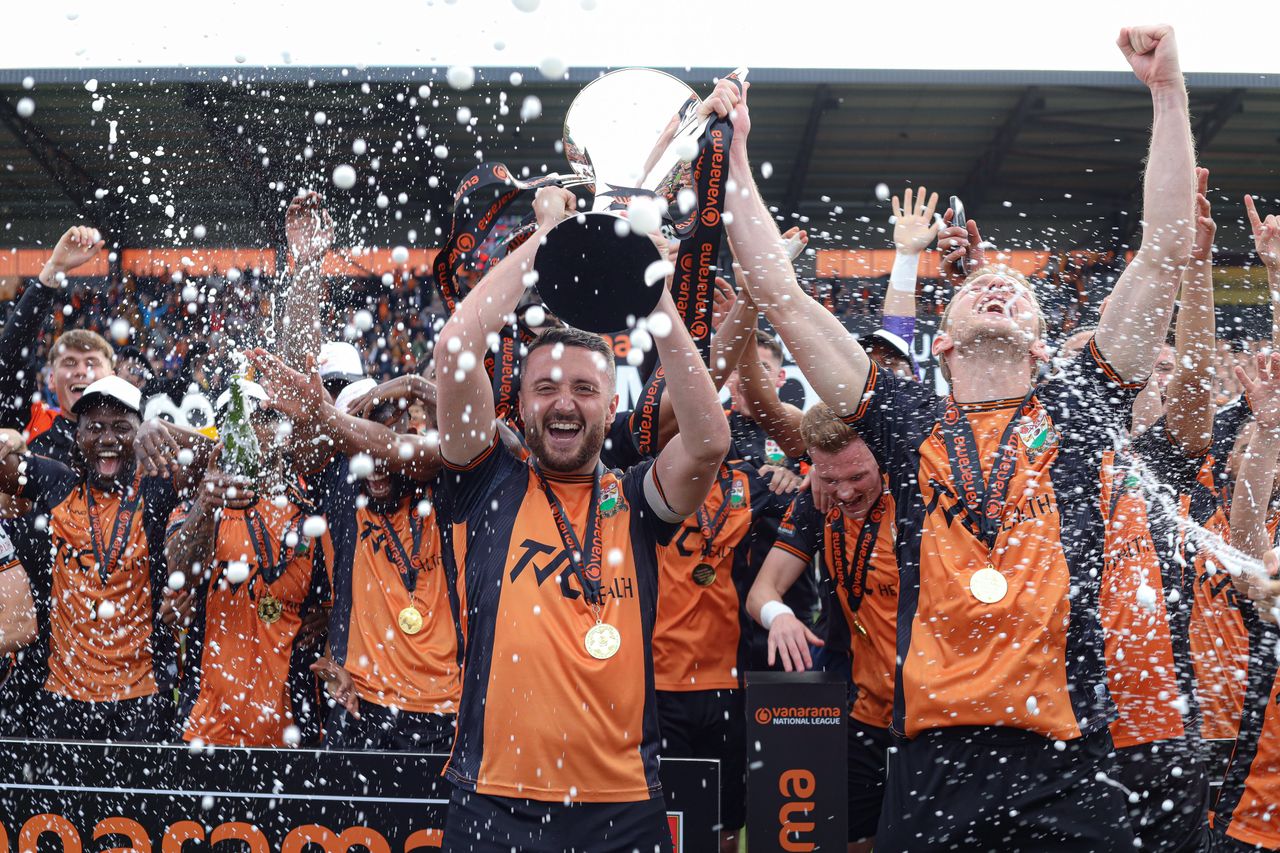
For Doncaster, it was a new hope. And they seized it.
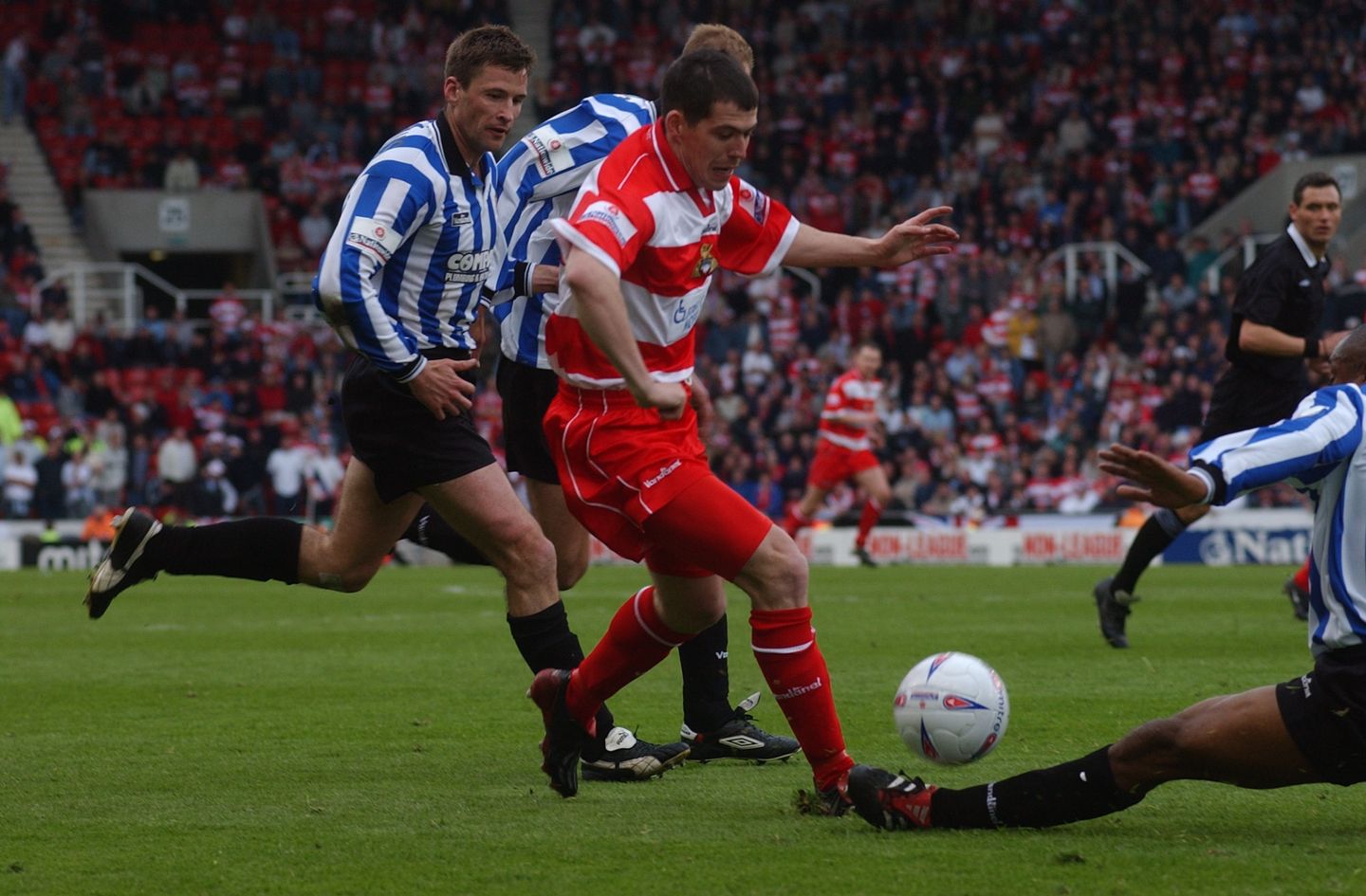
After a gruelling 46-game season, Doncaster beat Chester City on penalties after finishing all-square in a two-legged semi to reach the first ever Conference play-off final, held at Stoke City’s Britannia Stadium. Dagenham & Redbridge provided the opposition.
It was a thrilling, frantic final. Doncaster led twice; Dagenham pegged them back twice. At 2–2 after 90 minutes, the tie went to extra time under 'golden goal' rules. The next team to score would win promotion instantly.
Then came Francis Tierney’s moment. In the 110th minute, Paul Barnes broke down the left and squared the ball across goal. Tierney arrived, side-footed home, and sparked pandemonium. In that moment, he became 'Sir' Francis Tierney.
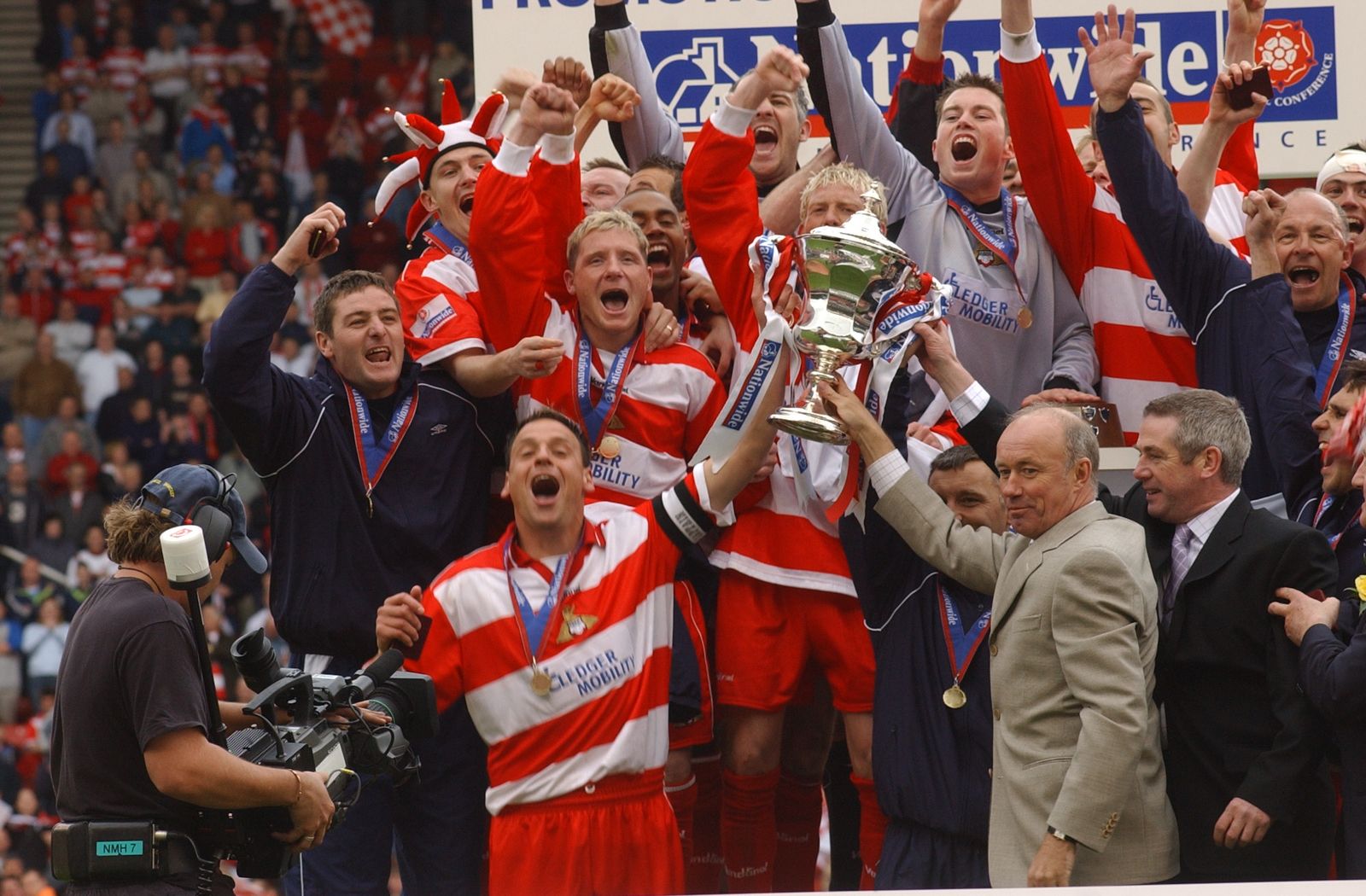
Doncaster Rovers were back in the Football League after five long years. The fans flooded the pitch. John Ryan, the lifelong supporter turned chairman, wept.
The Conference’s maiden play-off campaign had its fairytale ending. But the real story was only beginning.
If the Football League thought Doncaster would need a year or two to 'find their level', they were wrong. In 2003–04, their first season back in the EFL, Rovers didn’t just hold their own... they won League Two, finishing top ahead of Hull City, Huddersfield Town, and Swansea City.
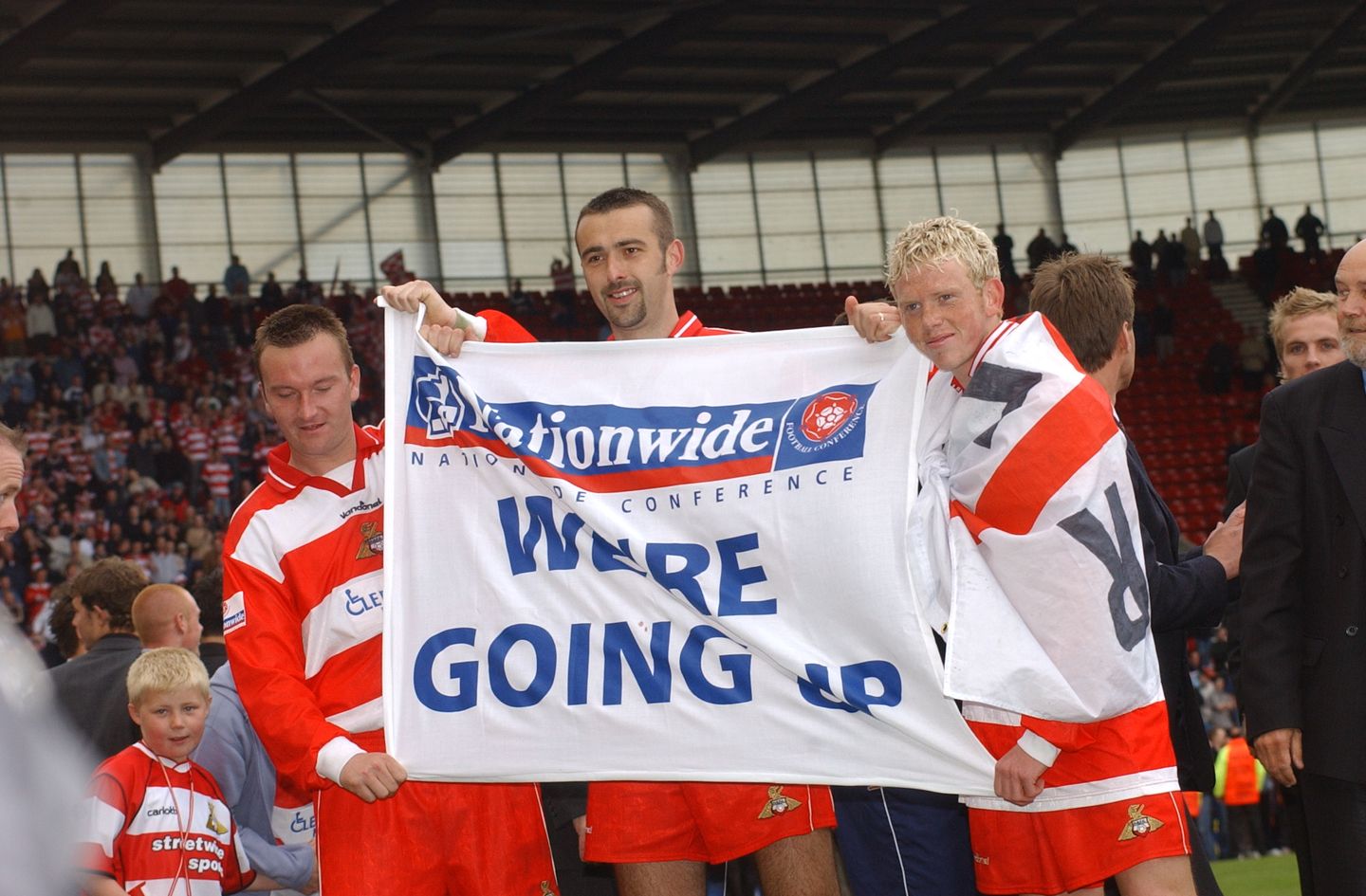
Back-to-back promotions. In doing so, they became the first club of the modern era to jump straight from the Conference into League One.
This wasn’t luck or momentum. It was proof that the top National League sides were already EFL quality.
At the time, Doncaster’s feat felt extraordinary. But in the years since, it’s become surprisingly common.
Since the introduction of automatic promotion in 1986–87 and play-offs in 2002–03, eight clubs have managed back-to-back promotions, moving from the National League into League One within two seasons:
That’s eight in 21 seasons. Nearly one in five of all National League promotions leading to an instant follow-up. Far from struggling, the majority of promoted clubs finish in the top half of League Two the very next year.
The data proves the point. The average position of a promoted club in their first League Two season is 11.2; the median position is 10th.
That’s top-half, comfortably above survival level... and well above the EFL’s own 'yo-yo' line between divisions. It’s not a gap, it’s a glass ceiling. The evidence is overwhelming. Doncaster didn’t defy the odds; they exposed the illusion.
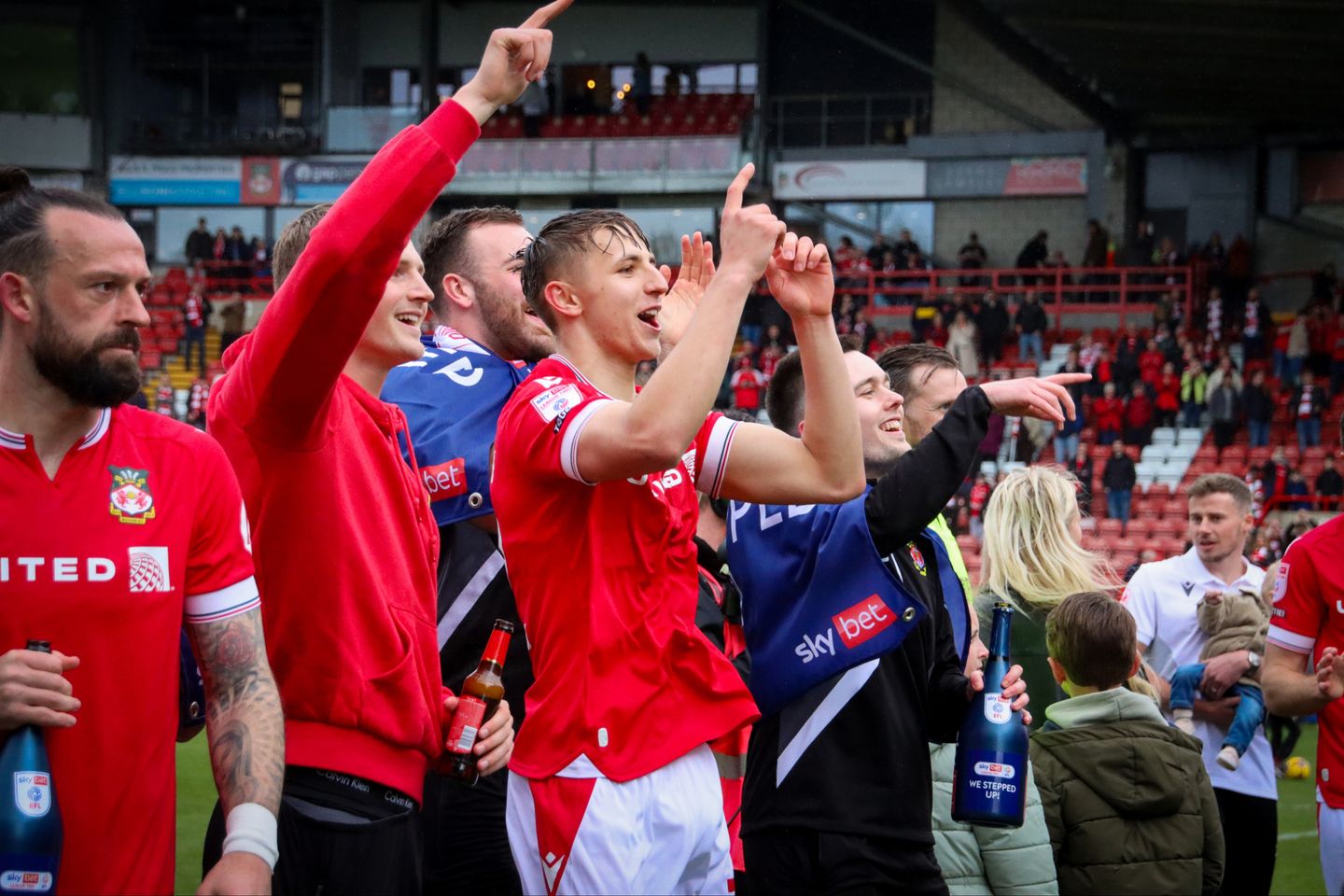
The National League’s top sides are professional, well-supported, and capable of competing in League One given the chance.
And yet, nearly 40 years after automatic promotion began, there are still only two places available each year. That’s two out of 24... just 8% of the division’s membership. The gap is still too narrow.
The play-offs were supposed to give ambition a pathway... and they have. But two decades on, it's clear that the second promotion place granted in 2003 was just half a solution.
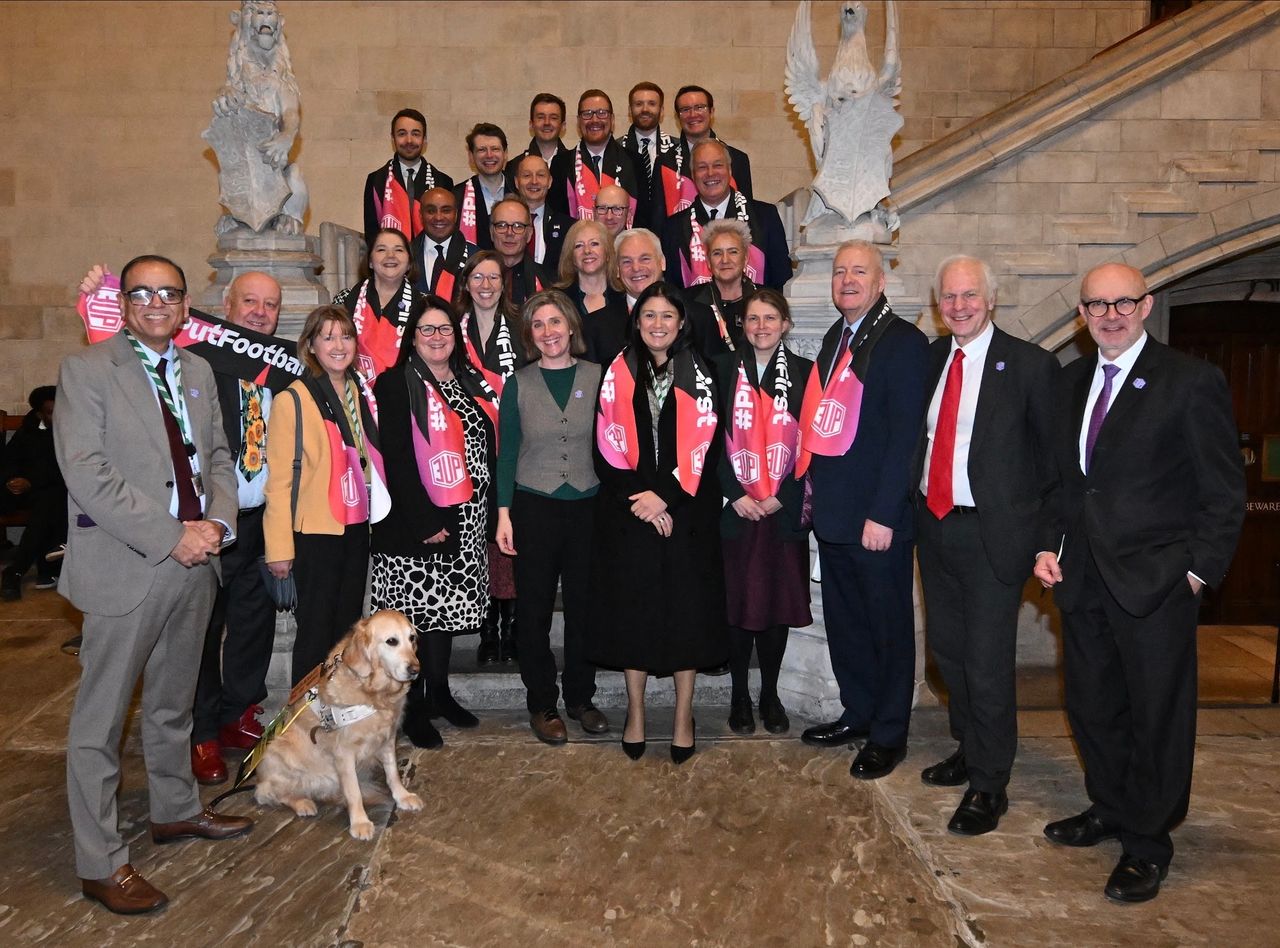
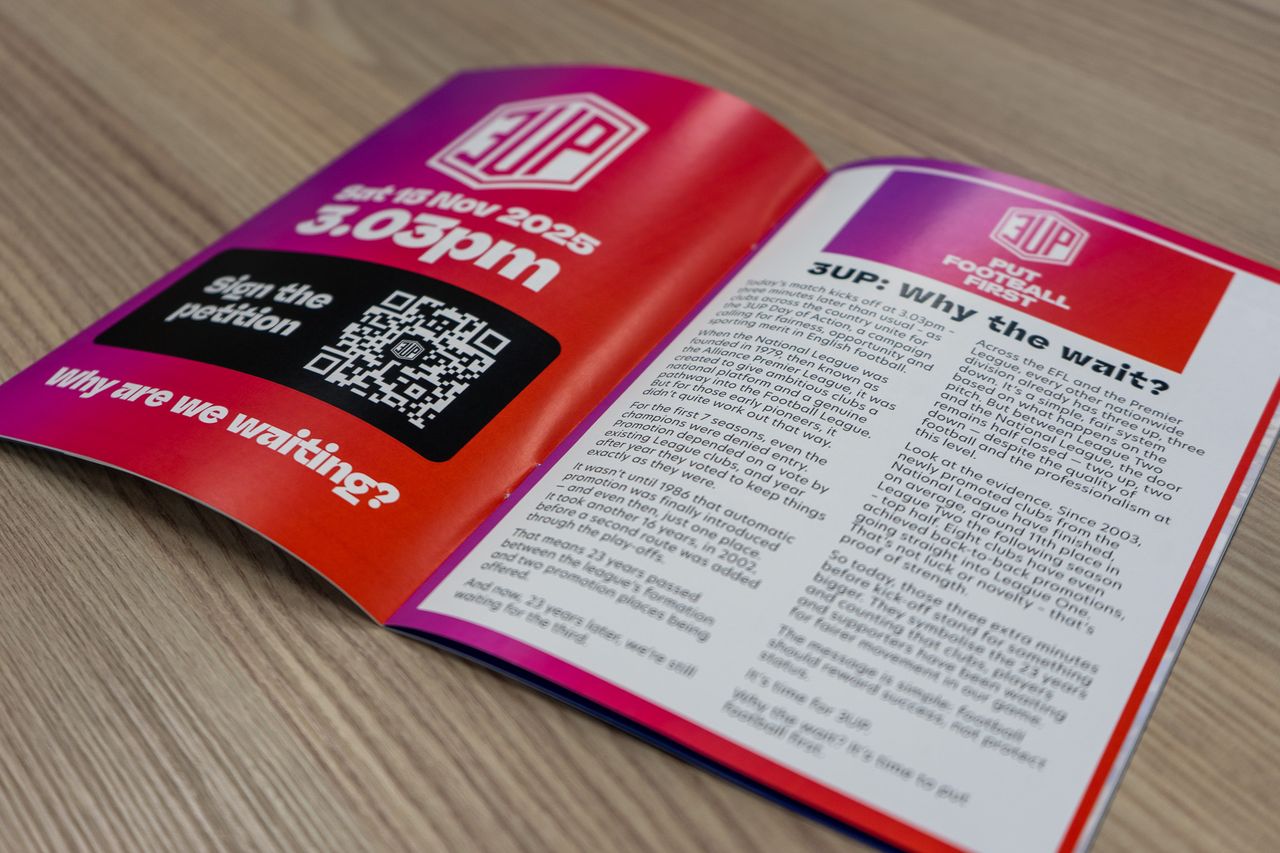
On Saturday 15 November, our games will kick off at 3.03pm - the Day of Action draws attention to our cause and allows us to give a clear message: it's time to put football first, and to grant 3UP.











© The National League 2026